Are you tired of your kitchen sponge smelling bad or looking dirty no matter how often you rinse it? What if you could easily kill the germs hiding inside your sponge without buying a new one every week?
Cleaning your sponge in the microwave is a quick and simple trick that can save you time, money, and keep your kitchen healthier. You’ll discover exactly how to do it safely and effectively, so your sponge stays fresh and bacteria-free.
Keep reading to learn the easy steps that will change the way you clean your sponge forever!
Credit: tidyhere.com
Preparing The Sponge
Getting your sponge ready for microwave cleaning is a crucial step that affects how well it gets sanitized. You want to make sure the sponge is properly prepared to avoid any risks and to maximize cleanliness. Let’s look at what you need to do before popping it in the microwave.
Rinsing And Wetting
Start by thoroughly rinsing your sponge under running water. This removes loose dirt and food particles that could burn or smell bad during microwaving.
Make sure the sponge is wet but not dripping. A damp sponge heats evenly and creates steam, which helps kill bacteria. Have you ever noticed how a dry sponge can easily catch fire in the microwave? Keeping it wet avoids that risk.
Adding Cleaning Agents
Adding a bit of cleaning agent can boost the effectiveness of microwave sanitation. You can use a few drops of lemon juice, white vinegar, or even a mild dish soap.
These agents help break down grime and add a fresh scent. Just be careful not to soak the sponge in harsh chemicals, as microwaving those could release harmful fumes.
Try squeezing the sponge gently after applying the cleaning agent to spread it evenly. This small step ensures better coverage and a deeper clean.

Credit: tidyhere.com
Microwaving Process
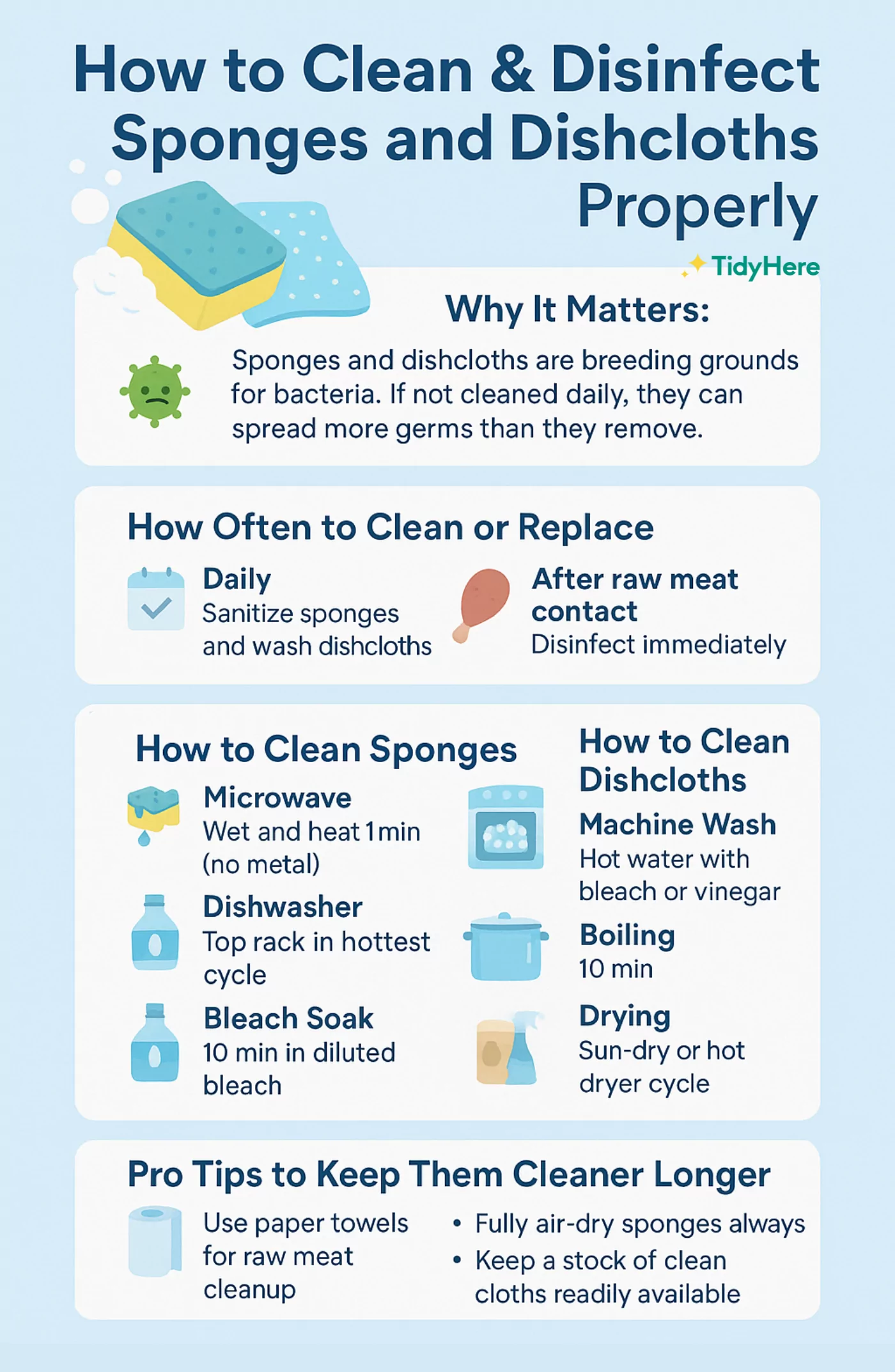
Cleaning a sponge in the microwave is a quick and effective way to kill bacteria and refresh your cleaning tool. The microwaving process uses heat to disinfect the sponge thoroughly. However, it’s important to follow the correct steps to avoid damage or accidents.
Setting The Right Time
Timing matters when microwaving your sponge. Too little time won’t kill enough germs, while too much can burn the sponge or start a fire.
Generally, microwaving a wet sponge for about 1 to 2 minutes is effective. Make sure the sponge is soaked in water before placing it in the microwave; a dry sponge can catch fire quickly. If your microwave has different power levels, use a medium-high setting to balance thorough cleaning and safety.
Safety Precautions
Microwaving a sponge requires some safety measures to protect you and your kitchen. Always ensure the sponge is wet — dryness is a fire hazard.
- Use a microwave-safe plate to hold the sponge.
- Keep an eye on the microwave while running it.
- Let the sponge cool down before handling to avoid burns.
- Never microwave a sponge with metal scrubbing parts.
Have you ever wondered why some sponges come out smelling worse after microwaving? It could be due to trapped food debris or insufficient wetness. Taking a moment to rinse and soak your sponge before microwaving makes a big difference in results.
Post-microwave Care
After cleaning a sponge in the microwave, it’s crucial to handle it properly. Proper care ensures the sponge remains effective and hygienic. Follow these simple steps for post-microwave care.
Cooling And Handling
Let the sponge cool before touching it. This prevents burns from the heat. Place the sponge on a heat-resistant surface. Use tongs or gloves to handle it safely. Check for any remaining heat before using it again. Ensure it’s fully cooled to avoid any accidents.
Drying And Storage Tips
Allow the sponge to air dry completely. A dry sponge prevents bacterial growth. Place it in a well-ventilated area. Avoid storing it in a damp environment. Use a sponge holder with drainage to keep it dry. Replace the sponge regularly to maintain hygiene.

Credit: www.maidforyou.com.au
Frequently Asked Questions
How Long Should I Microwave A Sponge To Clean It?
Microwave the sponge for 1 to 2 minutes to kill most germs and bacteria.
Can Microwaving A Sponge Remove All Bacteria?
Microwaving kills many germs but may not remove all bacteria completely.
Is It Safe To Microwave A Wet Sponge Only?
Yes, always microwave a wet sponge to avoid fire or damage.
How Often Should I Clean My Sponge In The Microwave?
Clean your sponge in the microwave once a week for good hygiene.
Can Microwaving Damage My Sponge Or Microwave?
Microwaving a wet sponge briefly won’t damage either if done properly.
Conclusion
Cleaning a sponge in the microwave kills many germs quickly. Make sure the sponge is wet before heating. Heat it for about one to two minutes on high. Be careful when taking it out; it will be hot. Regular cleaning helps keep your kitchen safe and fresh.
Replace sponges often to avoid bad smells and bacteria build-up. This simple step saves time and keeps your sponge cleaner longer. Try this easy method to maintain a healthier kitchen daily.