Are you tired of your cakes sticking to the pan and ruining all your hard work? Learning how to grease a cake pan properly is the simple trick that can save your baking every time.
Whether you’re a beginner or just want to improve your baking skills, this easy step can make a big difference in how your cake turns out. Keep reading, and you’ll discover the best methods to ensure your cake slides right out, looking perfect and ready to impress.
Don’t let a stuck cake spoil your moment—let’s get your pan ready the right way!
Choosing The Right Grease
Choosing the right grease for your cake pan is important. It helps the cake release easily. The right grease also keeps the cake’s texture perfect. Some greases add flavor while others do not. Knowing the difference helps you bake better every time.
Butter Vs. Oil
Butter adds a rich, creamy flavor to cakes. It works well with most cake recipes. Butter also helps create a slightly crispy edge on the cake. Use softened butter for easy spreading.
Oil does not add flavor but provides a smooth release. It is great for moist cakes and delicate textures. Oils like vegetable or canola spread easily and evenly. They also stay soft at room temperature.
Using Non-stick Sprays
Non-stick sprays save time and reduce mess. They coat the pan evenly with little effort. Some sprays include flour, which helps prevent sticking even more. Spray pans from a distance to avoid pooling. This method works well for all types of pans.
Credit: www.tasteofhome.com
Step-by-step Greasing Process
Greasing a cake pan is a simple task that can dramatically improve your baking results. A well-greased pan prevents your cake from sticking and helps it come out cleanly every time. Let’s break down the process into clear, easy-to-follow steps to make sure your next cake bakes perfectly.
Applying The Grease Evenly
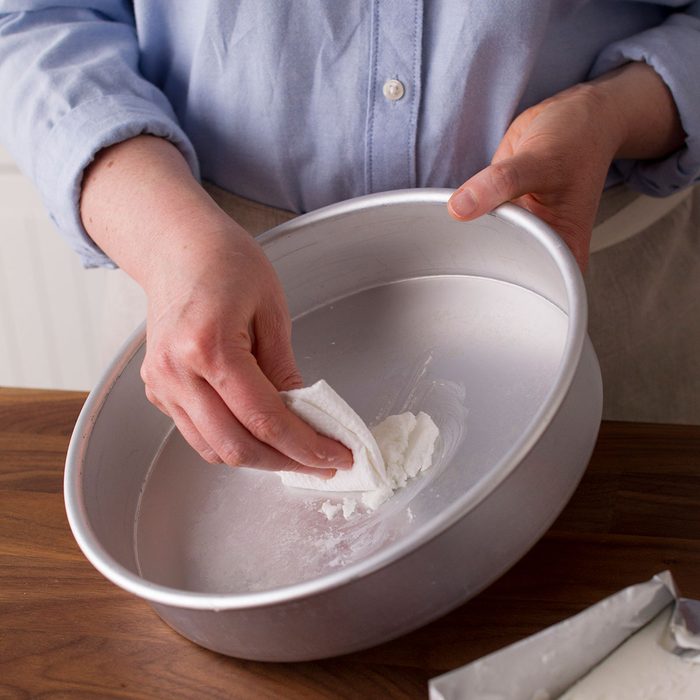
Start by choosing your grease: butter, shortening, or oil all work well. Use a paper towel, pastry brush, or your fingers to spread a thin, even layer across the entire inside surface of the pan. Don’t forget the corners and edges—they’re easy spots to miss but crucial for easy release.
Have you ever scraped a cake only to find parts stuck stubbornly? That usually means the grease wasn’t spread evenly. Taking your time here saves frustration later and keeps your cake’s shape intact.
Adding A Dusting Of Flour
After greasing, sprinkle a small amount of flour into the pan. Tilt and tap the pan gently, allowing the flour to coat all greased surfaces. This thin flour layer acts like a barrier, catching any spots where the grease might be too thin.
Use a flour that matches your recipe—wheat flour for most cakes, or cocoa powder for chocolate cakes to avoid unsightly white patches. If you don’t have flour handy, finely ground nuts or even sugar can sometimes do the trick.
Tips For Different Cake Pans
Greasing a cake pan prevents sticking and helps cakes release easily. Use butter or oil, then dust with flour for best results. For different pans, adjust the amount and type of grease to suit the material and shape.
Greasing a cake pan seems simple, but the type of pan you use can change the game entirely. Each type of pan has its quirks, and knowing how to handle them can make the difference between a cake that pops out perfectly and one that stubbornly sticks. Let’s dive into some specific tips for different cake pans to ensure your baking endeavors are a sweet success.
Greasing Silicone Pans
Silicone pans are non-stick by nature, which often leads to the question: do you even need to grease them? The answer is yes, but with a twist. A light coating of oil or cooking spray can help ensure your cake slides out effortlessly. – Use a Pastry Brush: For even coverage, use a pastry brush to apply a thin layer of oil. This method avoids pooling and ensures every nook is covered. – Oil Over Butter: Silicone doesn’t adhere well to butter, so opt for a neutral oil or cooking spray. This minimizes any potential sticking and won’t alter the cake’s flavor. – Test with Small Bakes: New to silicone? Test with a smaller bake to see how it reacts. This helps you adjust your greasing technique before tackling a larger cake.
Preparing Bundt Pans
Bundt pans, with their intricate designs, are notorious for sticking. Proper greasing here is crucial to maintain the cake’s beautiful shape. – Butter and Flour Combo: Start by applying a layer of softened butter using a pastry brush. Then, add a dusting of flour to coat the pan. This classic method helps release the cake without affecting its taste. – Get into the Crevices: Pay extra attention to the nooks and crannies. A missed spot can lead to tearing, so be thorough in your application. – Invert to Remove Excess: Once floured, invert the pan and gently tap out any excess flour. This ensures an even, non-sticky layer without clumps. Have you ever faced a stuck cake disaster? The right greasing technique can save your masterpiece. Knowing the nuances of your cake pan can transform your baking experience from frustrating to fulfilling. Happy baking!

Credit: food52.com

Credit: chelsweets.com
Frequently Asked Questions
How Do I Grease A Cake Pan Evenly?
Use a paper towel or brush to spread butter or oil in a thin, even layer on the pan.
Can I Use Oil Instead Of Butter To Grease A Pan?
Yes, vegetable oil or cooking spray works well to prevent sticking in cake pans.
Should I Flour The Pan After Greasing It?
Lightly dusting flour over the grease helps cakes release easily and keeps crusts from sticking.
What’s The Best Way To Grease A Non-stick Cake Pan?
Use a small amount of oil or butter; avoid harsh scrubbing to protect the coating.
How Much Grease Should I Put In A Cake Pan?
Just enough to cover the surface thinly; too much can cause uneven baking.
Conclusion
Greasing a cake pan is simple but important. It stops cakes from sticking and helps them bake evenly. Use butter, oil, or non-stick spray to coat the pan well. Don’t forget to cover all corners and edges. A light dust of flour after greasing can help too.
These small steps make your cake come out clean and perfect. Try this next time you bake. You’ll notice the difference right away. Happy baking!