Have you ever wondered exactly how high to fill your cake pan for the perfect bake? Pour too little batter, and your cake might turn out flat and dry.
Pour too much, and it could overflow, creating a mess and ruining your hard work. Getting this simple step right can make all the difference between a cake that looks homemade and one that looks professionally baked. Keep reading, and you’ll learn the easy trick to filling your cake pan just right every time—no more guesswork, just delicious results!

Credit: food52.com
Choosing The Right Pan Size
Choosing the right pan size plays a crucial role in baking. It affects the cake’s shape, texture, and baking time. Using the correct pan size helps the cake rise evenly and bake through without burning or undercooking.
Each recipe usually suggests a specific pan size. Ignoring this advice can lead to disappointing results. A too-small pan causes overflow, while a large pan can make the cake too thin.
Impact On Cake Height
The size of the pan directly impacts the cake’s height. Smaller pans create taller cakes because the batter is deeper. Larger pans spread the batter thin, making shorter cakes.
A taller cake often needs longer baking time. Shorter cakes bake faster but may dry out. Choosing the right pan size controls the cake’s final height and texture.
Adjusting Batter Quantity
Adjust batter amounts to fit the pan size. More batter is needed for larger pans to keep the cake thick. Use less batter in smaller pans to avoid overflow.
Measure batter carefully to fill the pan about two-thirds full. This allows room for the cake to rise without spilling. Adjusting batter quantity keeps baking smooth and mess-free.

Credit: www.lemon8-app.com
Ideal Batter Fill Levels
Knowing the ideal batter fill level helps bake cakes perfectly every time. Filling the pan too much causes overflow. Filling it too little leads to dry, uneven cakes. The right fill level balances rising space and baking time.
Standard Fill Guidelines
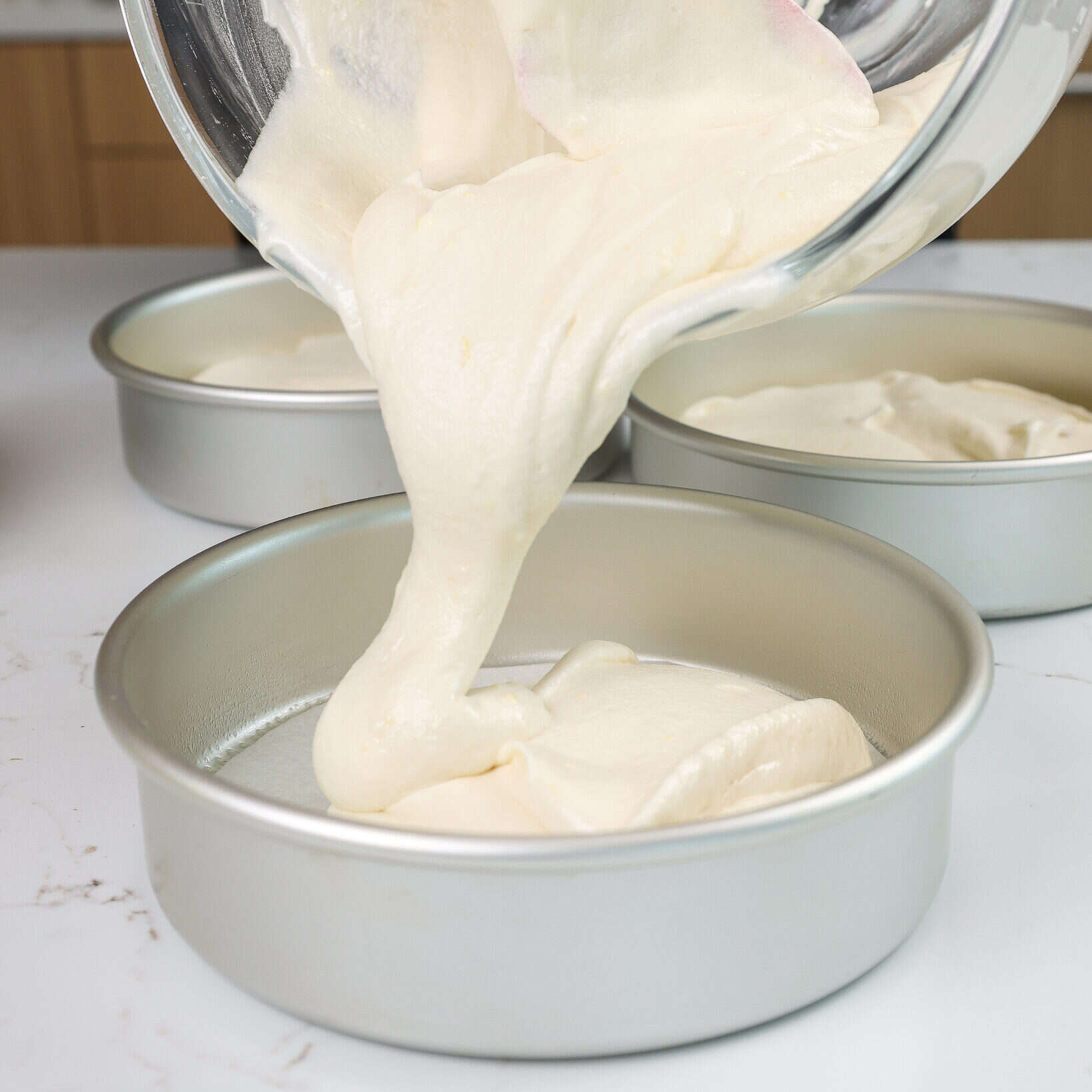
Fill the cake pan about two-thirds full. This equals roughly 60% to 70% of the pan’s height. It gives batter room to rise without spilling over. For deep pans, fill less to allow for extra rising.
For example:
- 8-inch round pan: Fill about 2 inches high
- 9×13-inch rectangular pan: Fill about 1 to 1.5 inches high
- Bundt pans: Fill no more than half full
Avoiding Overflow And Undercooking
Overflow happens when batter fills the pan too high. It creates a mess and uneven cakes. Undercooking occurs when the batter is too shallow. The cake may dry out or bake too fast on edges.
Use these tips to avoid problems:
- Leave 1 inch from the pan rim for batter expansion
- Check the pan size and adjust batter amount
- Use a toothpick test to check doneness
Techniques For Even Baking
Filling a cake pan about two-thirds full helps cakes bake evenly without overflowing. Too much batter causes spills, while too little can make a flat cake. Proper fill level ensures a perfect rise and texture every time.
Achieving perfectly even baking is a skill every home baker desires. It’s not just about following a recipe to the letter. It’s about understanding your tools and techniques to deliver that flawless cake every time. Let’s dive into some proven methods that can help you achieve consistent results.
Using Baking Strips
Baking strips are a game-changer in the quest for even cakes. These dampened fabric strips wrap around your cake pans, ensuring that the edges of the cake don’t cook faster than the center. This method helps prevent the dreaded domed tops, resulting in a flat and even surface. Using them is simple. Soak the strips in water, remove excess, and wrap around your filled cake pans. You’ll be surprised how this small step can make a significant difference.
Monitoring Oven Temperature
Oven temperature can be a silent saboteur. Even if you set your oven to a specific temperature, it might not be accurate. An oven thermometer is an affordable tool that ensures your oven is at the right heat level. Place the thermometer inside your oven before baking. Check it periodically to ensure consistency. This tiny investment can save many future baking mishaps. Consistent oven temperature helps every part of your cake rise evenly. Remember, even a slight temperature variation can lead to uneven baking. Incorporating these techniques into your baking routine can transform your results. Imagine the satisfaction of slicing into a perfectly even cake, knowing you mastered the process. How will you adjust your baking strategy next time?
Credit: chelsweets.com
Frequently Asked Questions
How Full Should I Fill My Cake Pan?
Fill the cake pan about two-thirds full to allow the batter to rise without spilling.
Why Not Fill The Cake Pan To The Top?
Filling to the top causes batter to overflow during baking, making a mess and uneven cakes.
Does Pan Size Affect How High To Fill It?
Yes, larger pans need more batter, but still fill only two-thirds to prevent overflow.
How Does Overfilling Affect Cake Texture?
Overfilled pans can cause dense, undercooked centers and burnt edges due to uneven baking.
Can Underfilling The Pan Cause Problems?
Yes, underfilling may lead to thin, flat cakes that bake too quickly and dry out.
Conclusion
Filling your cake pan correctly helps your cake bake evenly. Usually, fill the pan two-thirds full to avoid overflow. This space lets the batter rise without spilling. Remember, thicker batters may need a little more room. Watch your cake while baking to make sure it cooks well.
Use these tips to bake cakes that look and taste great every time. Happy baking!